Shri Sidddharameshwar Education Trust
S.G.Balekundri Institute of Technology ಎಸ್.ಜಿ.ಬಾಳೆಕುಂದ್ರಿ ತಾಂತ್ರಿಕ ಮಹಾವಿದ್ಯಾಲಯ
Approved by AICTE | Affiliated to VTU | NBA Accredited

Shri Sidddharameshwar Education Trust
Approved by AICTE | Affiliated to VTU | NBA Accredited
Engineering a greener tomorrow through clean energy research, innovation, and community action
Aligned with the United Nations' 17 Sustainable Development Goals, this COE channels engineering creativity toward solutions for renewable energy, environmental conservation, and sustainable infrastructure — equipping SGBIT students to lead the green transition.
Sustainability has emerged as a core principle of engineering driven by increasing environmental challenges, rapid urbanization and the need for responsible use of natural resources. In this context, to align with the Sustainable Development Goals (SDGs), the Centre of Excellence in Sustainable Development and Energy (CoE-SDE) has been established at our institution. The Centre functions as a multidisciplinary hub that integrates education, research, innovation, consultancy and community engagement. It focusses on developing sustainable solutions that address societal needs while minimising environmental impact, thereby contributing to national priorities and global sustainability efforts.
The Centre has 30 members working on about 20 research projects. It has associated itself with partners such as, S. Nijalingappa Sugar Institute, District Urban Development Cell, Belagavi, Karnataka State Department of Agriculture and Global Energy Pvt. Ltd. to work towards providing solutions to real world societal problems.
Vision:
To become a leading academic and research hub that promotes global sustainable development goals by developing skills, driving innovation through research, fostering collaboration and delivering tangible societal impact solutions.
Mission:
Mission Statement 1
To promote interdisciplinary research and innovation in sustainable infrastructure by integrating smart grid technologies, renewable energy systems and advanced engineering practices.
Mission Statement 2
To develop skilled professionals and industry-ready graduates through applied research and capacity-building programs focused on smart energy systems, resilient infrastructure and sustainable urban development.
Mission Statement 3
To collaborate with industry, government agencies, and urban local bodies to design, test, and implement region-specific solutions aligned with Sustainable Development Goals.
Our interdisciplinary work spans cutting-edge domains — bridging theory with hands-on engineering innovation.
1. Variable Compression Ratio Engine
2. 1 kW PV panel
3. Tribrid bike (CNG, Battery, petrol)
4. Electric car, bike and bicycle
The centre has secured ₹18 lakhs in competitive research funding: DST (Science & Technology) SEED division (₹10L for SolarGram), MNRE (Ministry of New & Renewable Energy) innovation grant (₹5L for BioGas Campus), and Karnataka State Council for Science & Technology (₹3L for AquaSense). The COE was recognized as a "Green Innovation Hub" by TERI in 2024 and featured in the National Renewable Energy Conference proceedings.
Solar micro-grids installed near Belagavi, providing 24/7 clean energy access.
Low-cost water purification research funded by DST for rural Karnataka communities.
Awareness drives promoting sustainable living practices across schools and colleges.
Our research and outreach activities directly contribute to the following United Nations SDGs:
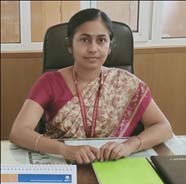
Dr. Supanna S. Shirguppe is a distinguished academician and researcher currently serving as the Professor and Head of the Department of Electrical and Electronics Engineering at S. G. Balekundri Institute of Technology (SGBIT), Belagavi. In addition to her departmental leadership, she heads the Centre of Excellence in Sustainable Development and Energy, where she focuses on interdisciplinary research and emerging technologies.
Professional Profile
Key Contributions & Research
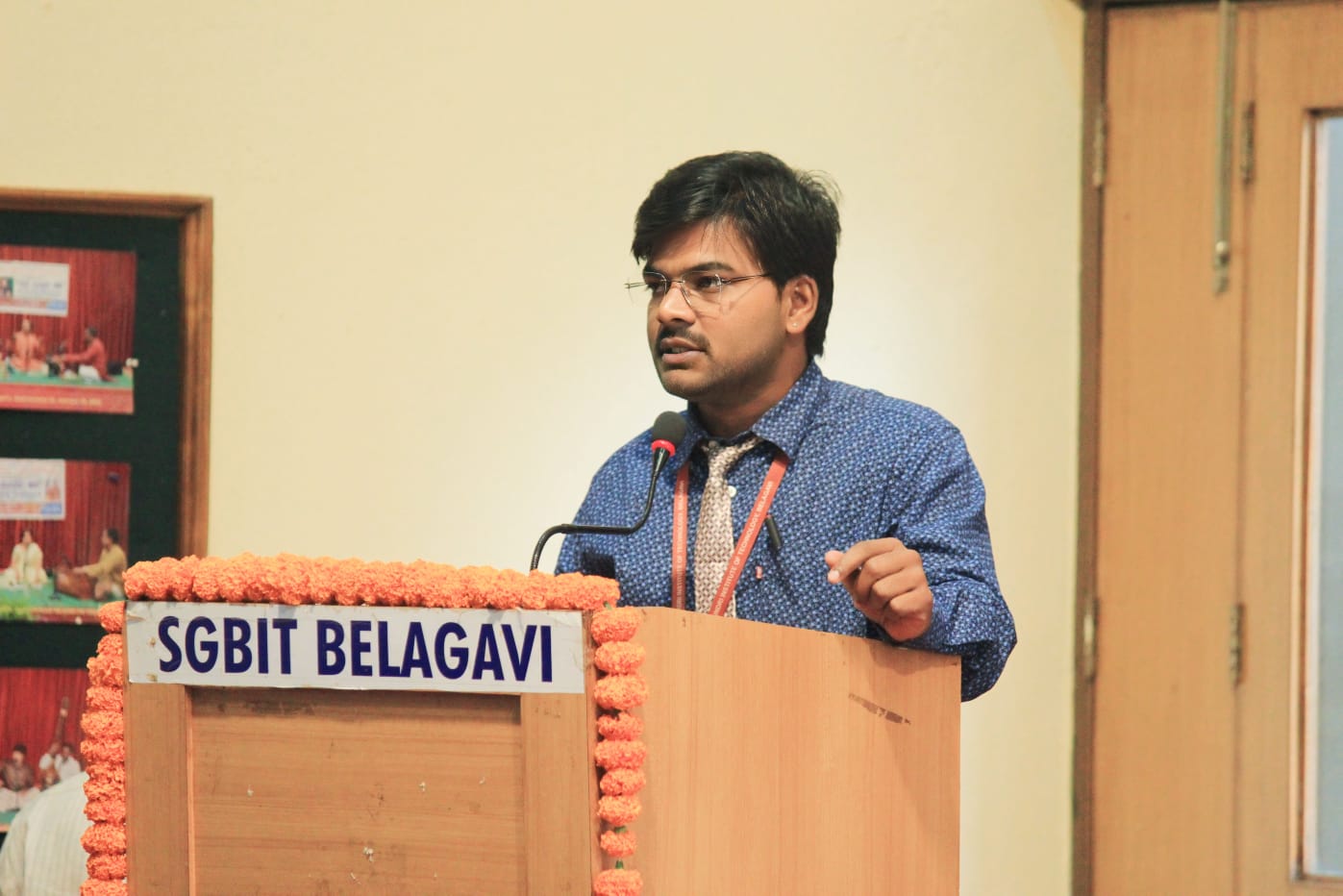
Dr. Santosh Chikkabagewadi is an accomplished Civil Engineering academic with over 11 years of teaching and extensive research experience in Transportation Engineering and sustainable mobility. Holding a Ph.D. from Visvesvaraya Technological University, his work focuses on traffic systems, school transportation, and infrastructure sustainability. He has published multiple Scopus-indexed and peer-reviewed papers addressing urban mobility challenges, service quality, and economic feasibility of transport systems. His research integrates data-driven modeling and practical solutions for real-world problems. In addition to teaching, he actively contributes as a speaker, reviewer, and mentor, promoting innovation, interdisciplinary research, and sustainable development in civil engineering.
Collaborate on research projects, community initiatives, and sustainability-focused innovation programs.